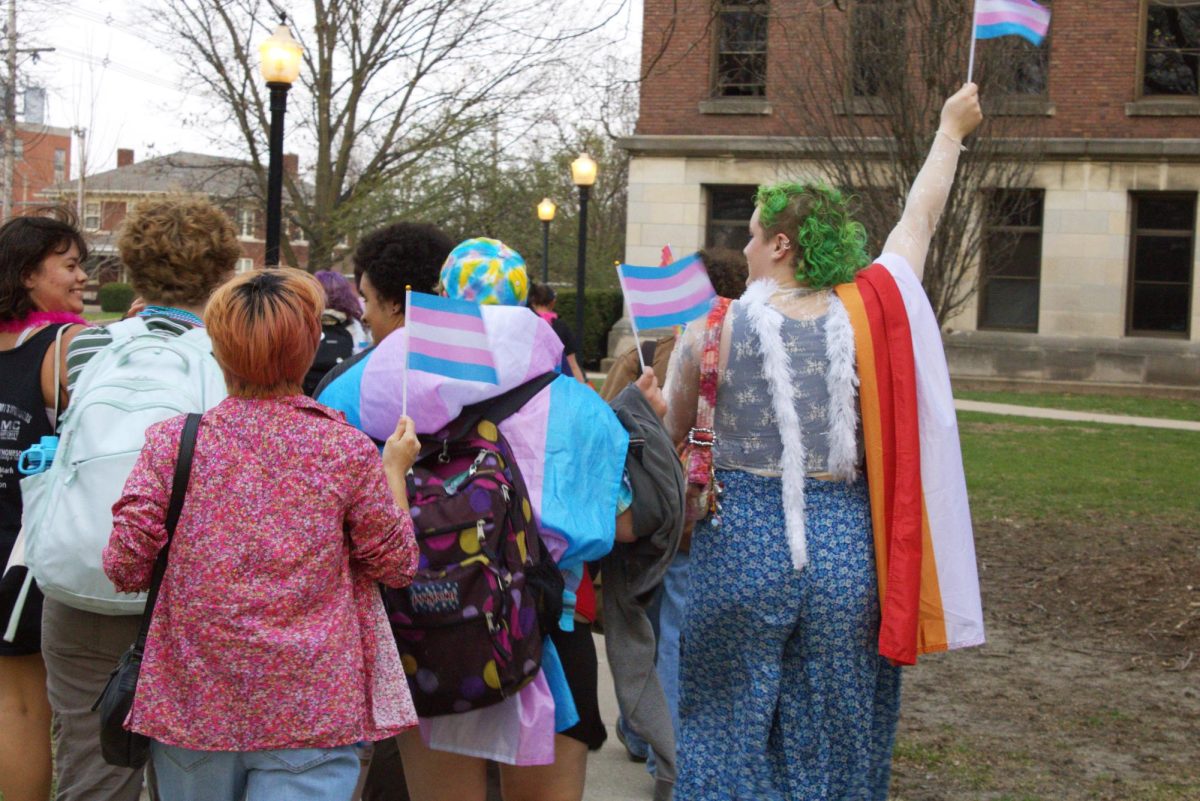
On Tuesday, March 31, marking International Transgender Visibility Day, some of our transgender students and allies could be seen parading (or Sashaying, as the event’s title indicated) down the sidewalks of the campus in blue and pink. Established in 2009 by Rachel Crandall, the holiday serves as a more joy-focused companion to the Transgender Day of Remembrance, which honors trans victims of violence every November.
Here at Knox, LGBTQ+ Advisor Natasha Bernius created posters that were displayed in common buildings throughout the month and shed light on influential trans figures in history or the media.
Common Ground is one of Knox’s LGBTQ+ organizations, run out of the Gender and Sexuality Center on South Street. Their Vice President, senior Phoebe Amiri, spoke on the topic of trans visibility following the parade.
In terms of trans characters in fiction, they mention that both subtle and obvious representations can be positive, but that portrayals in the mainstream media still have a long way to go.
“I think the biggest thing is just – having one background character doesn’t do anything,” Amiri said. “Having a character whose only personality trait is that they’re transgender isn’t accurate for real life either. I’d like to see more characters that are messy and wonderful and at different stages in their transition[s] as well.”
They recommend “The Owl House” for its nonbinary representation with the character of Raine Whispers.
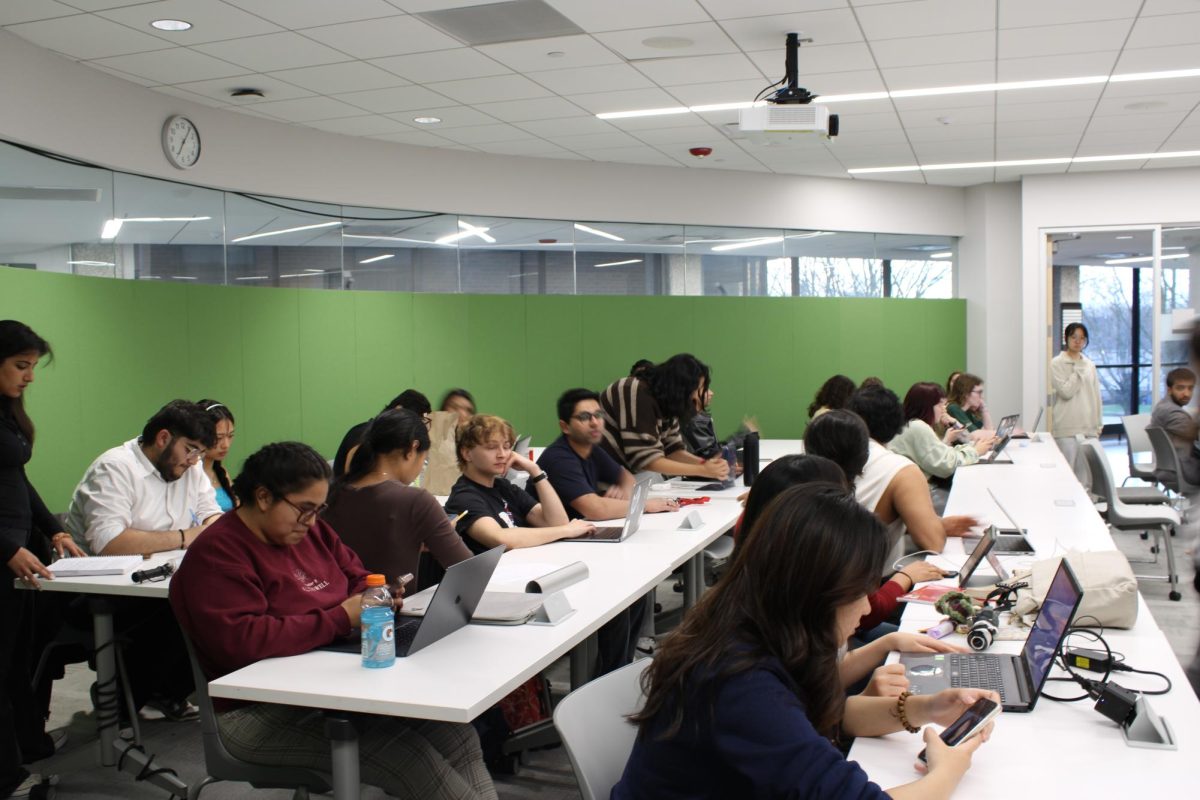
Common Ground holds weekly meetings on Wednesdays that are open to queer students and allies.
“Most of us are trans, those who aren’t trans are very strong allies,” Amiri said.
The Gender and Sexuality Center contains the Gender Affirming Closet, containing binders, gaffs, trans tape, and other items that are free and anonymous to pick up. They accept requests for items they may not have in stock.
Knox also has a form available that can update a student’s name in the Knox database. Central Illinois Friends was recommended for healthcare.
“That’s how I get my hormones, and they offer free services. I’ve had really good experiences every time I’ve gone in there.”
Amiri wasn’t aware of any transgender members of Knox staff or faculty. They note that, while Knox does have a prevalent queer population, there is still work to be done for trans students to feel more comfortable in some spaces.
“We have very little representation and very little recourse if there’s any transphobia that does happen,” Amiri said.
When asked what she wished more cis people knew, she mentioned the importance of recognizing trans people as belonging to their gender, rather than putting trans women and cis women under two separate gender categories.
“If you don’t know if a trans person is going to be comfortable with a certain way that you refer to people, it’s always good to just ask,” Amiri said.
Before concluding, Amiri wished to end with this final message.
“I’m in my senior year, I’m on my way out, and I’m really trying to […] cause as much of a ruckus as possible just being loud about my queerness. There’s a lot of subtle ways that I think that Knox’s administration tries to silence queer people, and it’s not very large and dramatic, but it’s very subtle. So I want to be loud, and I want to be visible, and I don’t want to be silenced,” Amiri said.
Trans visibility continues to be a topic of conversation beyond March, and Knox’s queer community has not seen the end of its events this term. Knox’s annual Queer Prom will take place towards the end of the academic year, with a date to be determined.