
The college has announced the reason for the significant reduction in student employment hours this academic year.
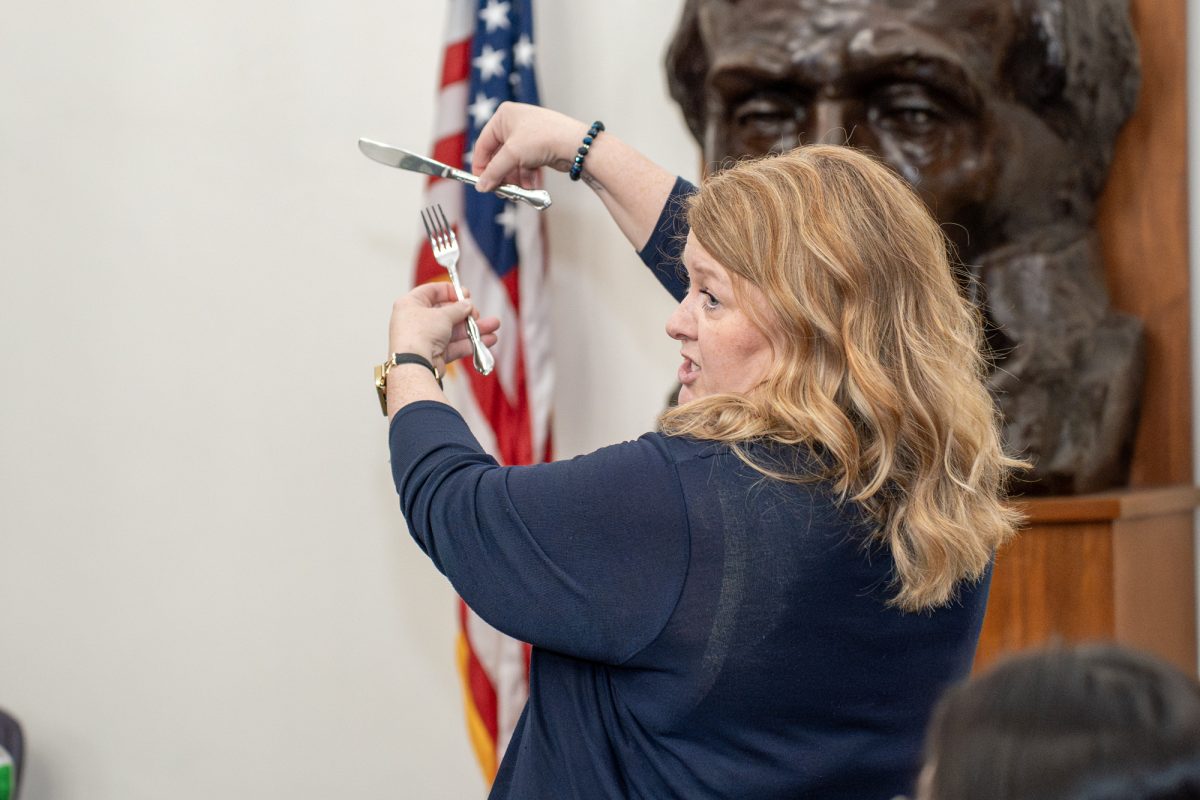
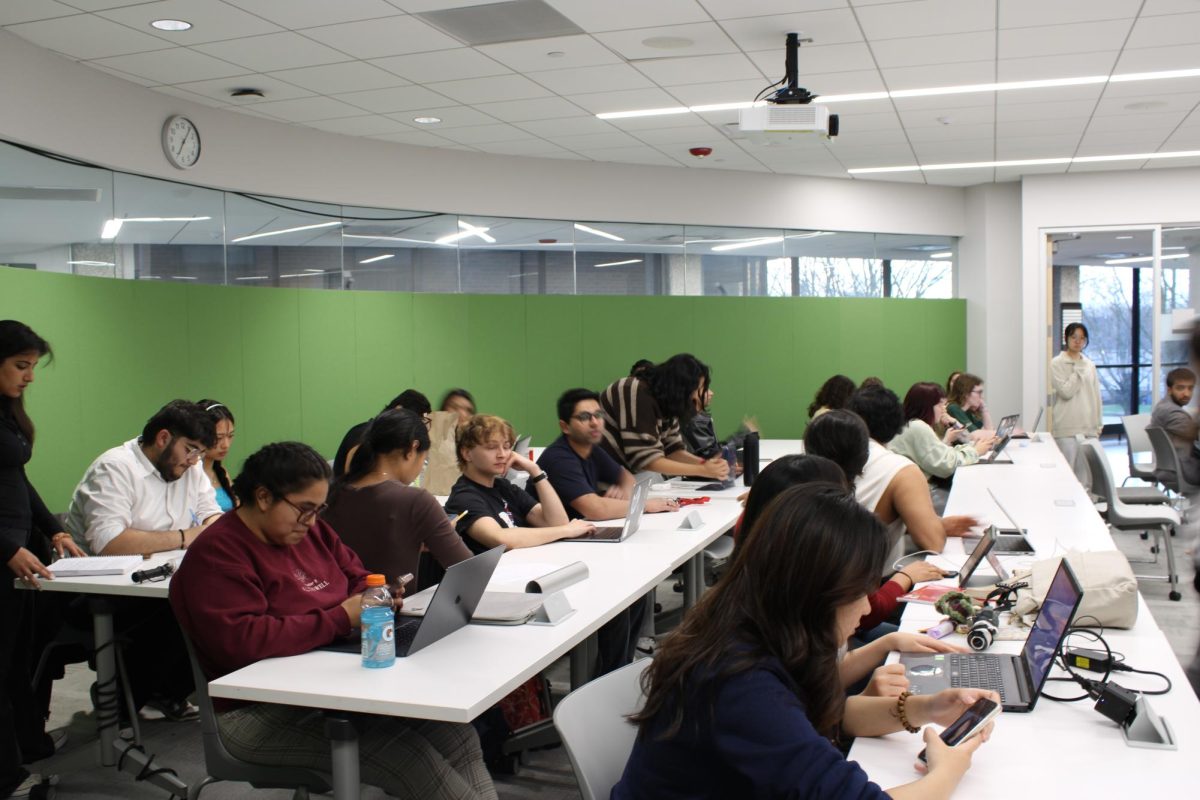
On Thursday, April 9, a student forum was held in the Abolition Lab, where Knox’s Senior Leadership Team answered students’ questions, particularly about the student employment survey sent by Human Resources on March 16.
In response to criticism about the reduction in student employment hours, Vice President for Strategic Initiatives & Chief of Staff Heather Bumps said that in past years, the school had exceeded its initial budget for student employment, and that current measures are intended to keep spending within the allocated budget.
“We’re not cutting the budget; we are enforcing our own policies,” said Bumps.
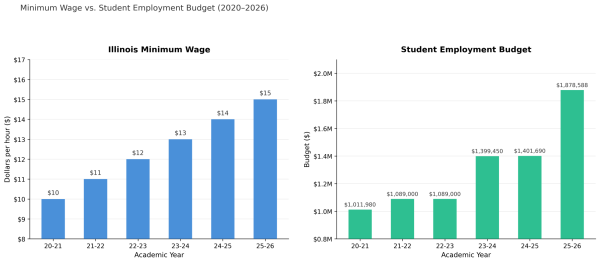
Bumps pointed out that although hour reductions may make it look like student employment budgets are getting cut, the student employment budget has actually increased since 2020.
She noted that the school pays students minimum wage even though it doesn’t have to, and with minimum wage rising from $12.00 an hour in 2022 to $15.00 in 2025, the school consequently had to increase its allocated student employment budget.
Students, however, seem to be having a hard time adapting to the student employment changes.
Junior Saul Velazquez worked in casual labor since his freshman year, up until last term when he and other students were let go. Velazquez currently has no other job and said that finding a new on-campus position is particularly challenging.
“Since they cut off a whole bunch of people, obviously, that just means finding a job on campus is a lot more competitive and hard to get. Especially if you’re a freshman and you just came in, and you’re new, you don’t know who to reach out to,” said Velazquez.
Velazquez said he has been impacted financially by losing his job.
“It’s hard because I have to pay off tuition. (…) I work just so I can help my parents pay off college. It affects me financially because now I don’t have as much financial freedom,” said Velazquez.
Senior Michaela-Ann Mueller, who experienced decreased hours working in CTL and as a computer lab assistant, faced similar struggles.
“A lot of people kind of rely on that money for a lot of things—books, groceries, whatever. For me personally, I have bills I have to pay, like my car insurance. It definitely made it difficult,” said Mueller.
Senior Ria Hameed works at Dare to Care and works in the mailroom. Hameed said the mailroom went from three people to two per shift, and that workers went from about five hours per week to approximately two. The most significant reduction, however, was at Dare to Care, where her hours dropped from about 10 per week to two.
“How can you do an event in under two hours? Sometimes we have to [overwork]. It’s not possible,” said Hameed.
Senior Aisha Spear said the hour reduction changes especially affect international students, who are not able to work off campus due to a law that prohibits them from doing so without a Curricular Practical Training (CPT).
“I know a lot of people are now working off campus to compensate (…), but international students, for example, they can’t. So you have to be an American citizen to do that,” said Spear.
Junior Vansh Chugh currently holds three jobs: CTL tutor captain, Peer Career Ambassador, and Richter/Vovis Center Ambassador, which is a stipend job. Chugh reported hour reductions in both his CTL and Career Ambassador roles. For the Career Ambassador job, maximum hours were reduced from 15 to 10, but since Vansh worked 10 hours, that didn’t affect him.
CTL eliminated one-on-one appointments. While budget constraints were a factor, the decision was also intended to push students toward the Red Room instead.
“I think that’s CTL’s way of dealing with [budget constraints] was reducing appointments… they want Red Room to be their primary thing,” said Chugh.
In addition to impacting CTL tutor hours, Chugh said that this decision could affect students who would be more comfortable doing one-on-one meetings with tutors.
“Some students are more comfortable reaching out to tutors one-on-one,” said Chugh. “Some students are afraid to walk in the Red Room; they don’t want to go to a place that’s designated for help.”
Spear experienced an hour decrease in her role as OISS International Ambassador, from four to five hours per week to three hours per week since the fall.
“We’re basically depriving international students of information because we’re not able to be compensated for that…There’s a lot less information being sent out,” said Spear.
At last Thursday’s forum, Chief Financial Officer and Vice President for Finance Scott Jones said the Senior Leadership Team is currently reviewing responses to the March 16 student employment survey, which asked about re-establishing the maximum hours students can work from 15 hours per week to 10, and counting stipend jobs that pay more than $750 toward the current two-job limit.
Another student forum will happen on May 18. Potential decisions about the survey will be discussed by then.