
Associate Professor of Political Science and International Relations Yubin Kim, started his second year aiming to bring prominent International Relations scholars to Knox. On April 9th, 2026, the “Nuclear Blackmail, Yesterday and Today” talk was successfully organized as his starting point.
Kim was inspired by his Nuclear Politics class’s students, whom he introduced to different scholars in the field. Students expressed their enthusiasm for interacting with those scholars.
“This is how I started preparing the talk without having much expectations. It is really hard to secure a prominent speaker to campus, especially without much funding, and Galesburg is pretty isolated,” Kim said.
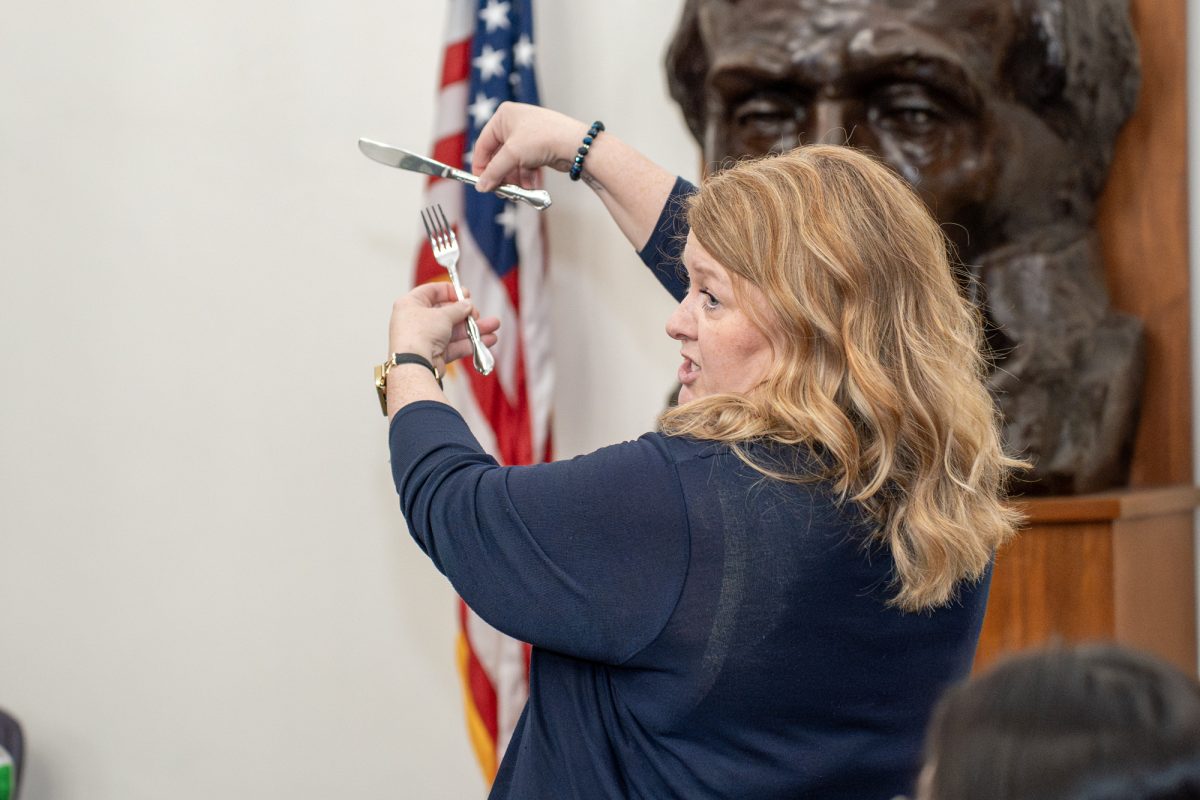
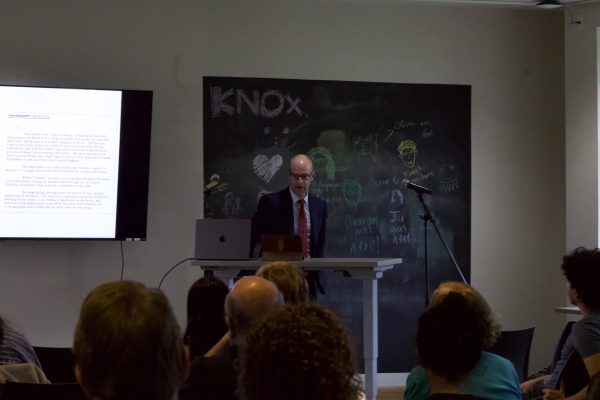
Dr. Todd S. Sechser, an eminent scholar in international security policy, delivered the talk. Dr. Sechser got his PhD degree in Political Science at Stanford University, and is currently the Associate Professor of Politics at the University of Virginia.
“I reached out to some scholars, and luckily, Dr. Sechser accepted. He co-published one book about nuclear policy, in which he will mention his findings and arguments in the talk as well,” Kim said.
(Minami Nishida)
The budget was also one of his biggest challenges when preparing for the talk.
“While there were lots of people willing to help me, I cannot get the full amount from one place,” Kim said. “I had to go to different entities to ask for the funding. It created so much work for me, along with the planning process. I think I wrote more than 100 emails.”
The event was primarily sponsored by the Cultural Events Committee. Additional support came from the Eleanor Stellyes Center for Global Studies, which covered all travel expenses for the guest speaker.
Union Board also contributed by providing refreshments. Finally, the remaining minor costs were funded through the Public Policy major funds, supported by Chair and Associate Professor of Political Science, International Relations, and Public Policy, Andy Civettini.
Nuclear security is a topic that is gradually rising. Kim mentioned that nuclear weapons can affect anyone, regardless of the country, so he also wanted to catch the general public’s attention on the topic.
Advertising the event was a priority for Kim since the spring term started. In addition to the mass emails, flyers, and social media campaigns to the student distribution lists, he also put up posters around Galesburg to attract a general audience.
Before the talk, Dr. Sechser went to Professor Civettini’s Introduction to Public Policy class to give a short introductory lecture about puzzles existing in nuclear policy and potential current nuclear threats. Kim hoped that the short lecture would help spark students’ interest and motivate them to come to the talk.
Additionally, Dr. Sechser prepared to provide background information for people who were new to nuclear weapons.
“Everything he mentioned is pretty easy to grab. I can understand what he said even though I do not have any background knowledge in International Relations,” sophomore Aaditya Trivedee said.
Preparing for the talk since the fall term, Kim really hoped it would be successful.
“My measure of success will be the number of people who attend, ideally around 50 to 60 people, and the quality of questions people ask,” said Kim.
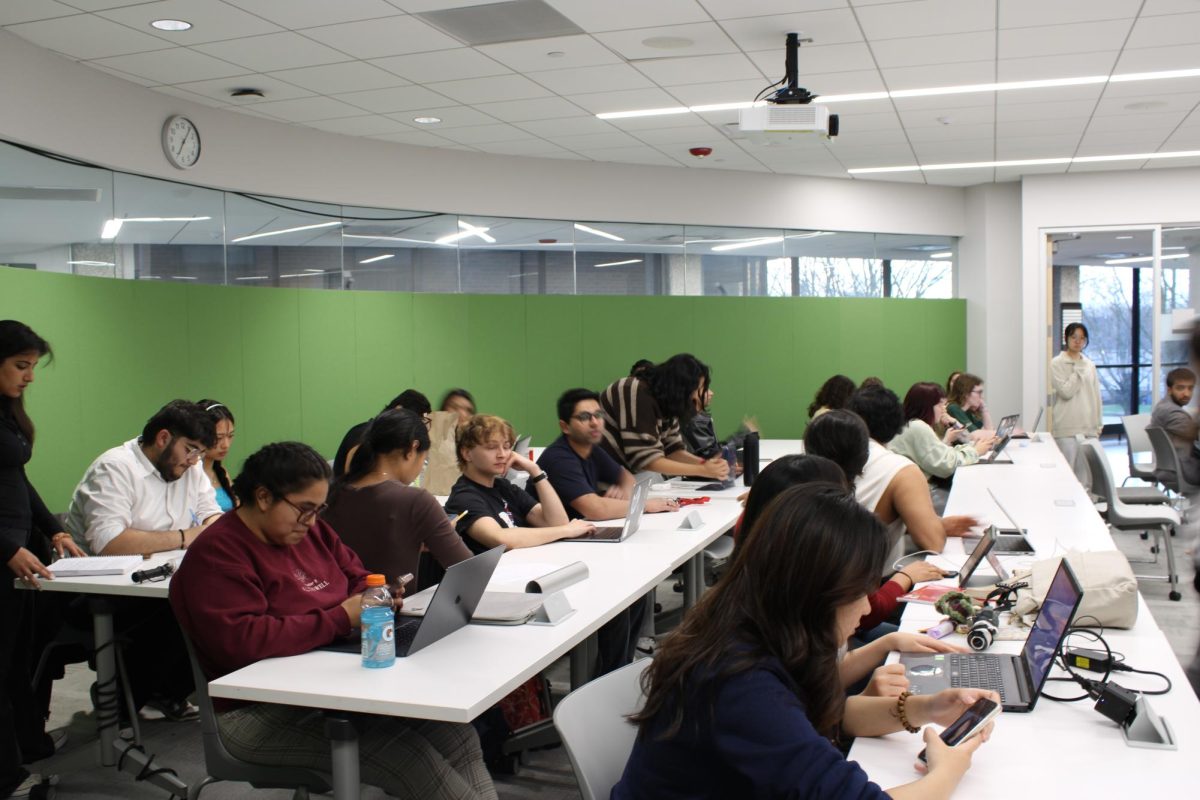
The talk received a good outcome, with approximately 50 people attending.
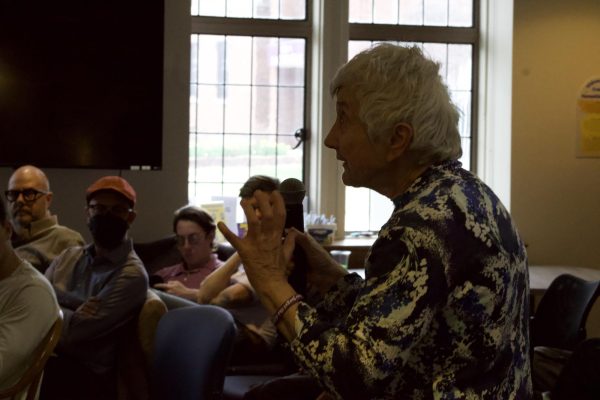
Sophomore Kotori Suzuki was one of the students who had a discussion with Dr. Sechser after the event.
“The speech is interesting. I talked about nuclear politics in one of my classes before, but the professor seems to have different opinions compared to Dr. Todd,” said Suzuki.
Dr. Sechser also left with a positive impression of Knox after the speech. Although Knox is of a small size, he said more people were present than in some of his previous experiences.
Dr. Sechser was born and raised in the Quad Cities, but he did not know about Knox before. Kim wishes to present a good image of Knox as well as to other scholars in the field. He believes that having connections with different scholars, such as Dr. Sechser, might be helpful for Knox graduates who aspire to get into good PhD programs in International Relations.
“When students apply for PhD programs, although they prepare carefully and have good grades, it is still very competitive. At the University of Virginia, for example, out of 200-300 applicants, only one to three students join the program, due to the budget cuts and downsizing,” said Kim.
Reflecting on this journey, Kim learned more techniques on how to organize talks in the future.
“I wish more people had shown up,” Kim said. “One thing I learned is that I need to choose the event date more carefully to make sure it does not overlap with other events.”
His goal is to bring more International Relations scholars to campus, at least one every two years in the spring term.
“I know lots of scholars about China; however, the budget is still a big challenge. The success of the first talk will affect my future chances to ask for more funding. I’m very glad that it has good results,” Kim said.