
Growing up, the idea of politics scared me.
Anything to do with the government terrified me, in fact. Yet, despite that, I knew politics were important. I knew that government rule had more importance than just red versus blue, Republican versus Democrat. I understood that the decisions made in office, the laws passed, the bills and the acts signed were all things that affected my life and my family’s lives.
I’ve heard countless people say “I don’t want to get into politics. It’s depressing.”
“I don’t want to worry about something I can’t change.”
“Just worry about it when it affects YOU.”
My whole life, I couldn’t understand people saying these things. And now, I can’t understand how I ever believed those sentences made sense. One minute, we complain of injustice, but when asked what we’ve done to stop it, we admit we haven’t tried anything. Do we understand how ludicrous that sounds? How privileged is it to say we have the choice to ignore issues that disrupt the very balance of our democratic system?
A democracy is defined as a system of government led by the whole population or all elected representatives of the state. The root of a democracy is having its people—the people who live in it, who work in it, who have raised their families in this country—make the decisions.
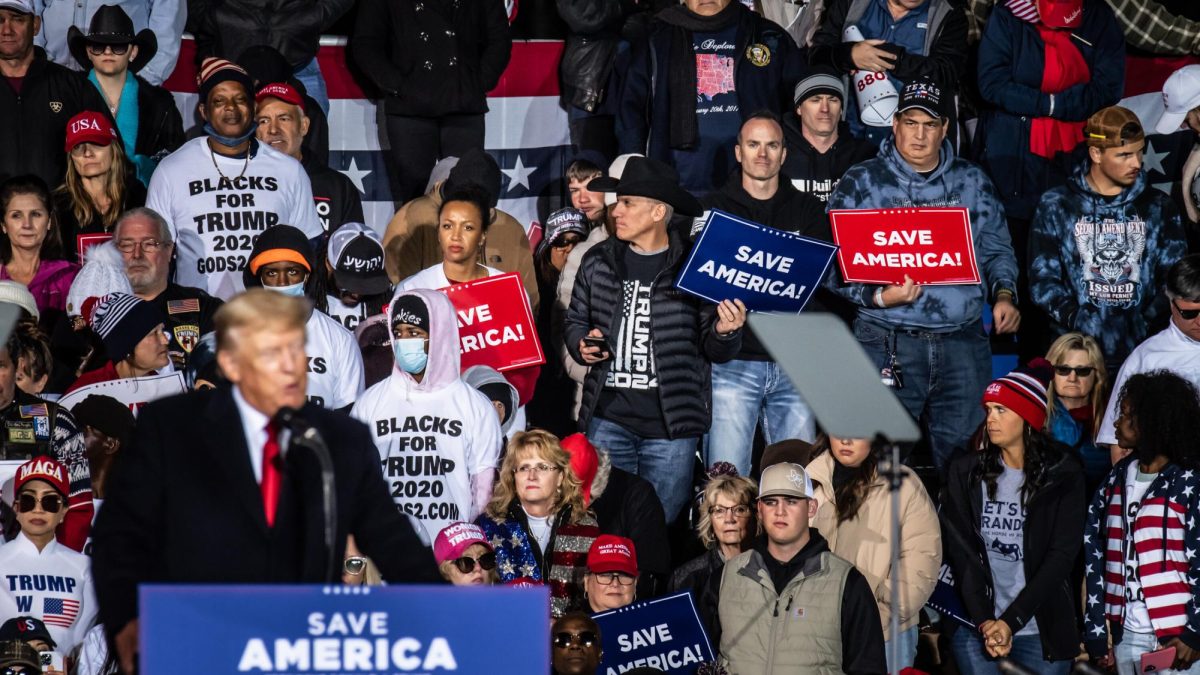
And yet, President Trump—a convicted felon on 34 counts, a man impeached twice—is being allowed to legalize racial profiling and deport hard-working people.
By staying out of it, we are allowing this to happen. How can we?
The United States was built on the backs of immigrants. The United States was only allowed to become the United States because the English sent ships of indentured servants, felons, and convicts to the colonies. By simple definition, an immigrant is someone living permanently in a country that is not their birth country. Hence, English colonials were immigrants. Our founding fathers were immigrants—we are embedded with the principles of immigration.
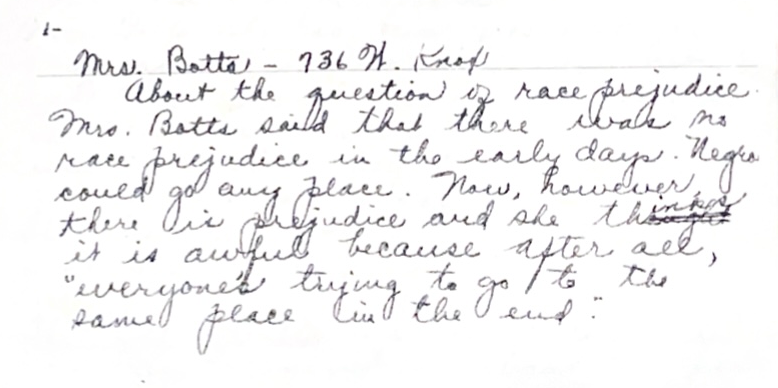
We call immigrants “aliens” because the U.S. has used that word as a classification for any person who is not a citizen or a national of the U.S. We describe things as “alien” when something is foreign or new to us. But we’ve also left this word to be used as a term that dehumanizes and isolates people solely for being “different.” And often, the people against whom the word “alien” is used on are people of color.
The U.S. Equal Employment Opportunity Commission defines racism as:
“…treating someone unfavorably because he/she is of a certain race or because of personal characteristics associated with race (such as hair texture, skin color, or certain facial features). Color discrimination involves treating someone unfavorably because of skin color complexion.”
It even goes further on to say:
“It is unlawful to harass a person because of that person’s race or color.”
How is it that this government website, meant to protect people of color in the workplace and instruct employers on how not to discriminate against employees, exists at the same time as the Supreme Court allowing federal agents to stop and question people based on factors of race?
In a 6-3 order, the Supreme Court granted the federal government’s request that it stay at a lower court’s discretion whether or not to bar federal agents from engaging in illegal racial profiling. This means that if a person, a citizen, even, gets detained by ICE simply for “looking the part of an immigrant,” there is no federal law protecting them from an unjust proceeding. It’s all up to the chance of the lower courts having mercy.
We’re letting bad decisions be made in our names because we say, “I don’t want to think about it,” or because we fear that even if we are involved, we won’t make a difference.
But we’re wrong. We are the only ones who can make a difference.
A woman, a U.S. citizen, in my home city, Waukegan, was tossed into the back of a car and detained by ICE. Despite the fact that she had her passport on her and had the literal mayor there to try and de-escalate the situation, she was still taken.
“I didn’t resist. I complied and everything, and they shoved me into the car,” 23-year-old Dariana Fajardo told WGN9. “It was very scary, but there’s people who have been through a lot worse.”
She had a Mexican flag on the hood of her car. She had countless people yelling for her to be released.
“We’re in uncharted territory right now. It’s not what we think is right. It’s what they think is right [emphasis added],” Mayor Sam Cunningham told WGN9.
As the daughter of two hardworking, law-abiding Mexican immigrant families, I don’t believe anyone should fear being stripped of their homes and sent back to a country they fled. People leave their home countries for a reason. Whether because of terror, hardship, or corruption–things we face even in our own country–they leave because they need to do what’s necessary. How is it fair for us to force them back to that?
I understand there are criminals and people who abuse the system to stay in the U.S., but there are also. Just. PEOPLE.
There are normal, regular people who smile just like everyone else. Who work, just like everyone else. Who try their hardest to provide for their families, just like everyone else.
There is no “right way” to seek a better life. There is the way you have access to, and the choice to take it or leave it behind.
If we want only “good people” to come in, we need to change the system that allows them in. The reason some of us consider our borders as “weak” is because it is more commonly heard or stereotyped that immigrants come into the U.S. illegally. However, the issue isn’t our border’s strength, but rather the fact that our system is far too difficult for people to come in “properly”. It costs too much money, takes too much time, and the U.S. makes it easier to climb a literal wall or cram into a loaded vehicle than to fill out paperwork.
A person, on average, trying to immigrate to the U.S doesn’t just fill out one piece of paperwork at a time. They have countless forms to file, countless requirements to reach before they are allowed to move on to the next, and with each new form, there is an insistence to fill out others or to prove they are worthy of consideration. As of August 2025, it takes an average of 7.6 months for parents trying to move their family into the U.S. to get approved, and that doesn’t include their average waiting time to then also be approved to work, another 8.1 months. All of this, however, can only be accomplished if they have the money to get the forms and have the resources to file them. Which often, they don’t.
We don’t make it easy.
It’s absurd to make a person prove they are “good enough” to come into our country when none of us had to. Natural-born citizens didn’t have to prove they were good enough at birth. Natural-born citizens didn’t have to prove they weren’t secretly evil the second they took their first breath.
Why do we make it so hard for people to come and live in the “land of opportunity”? How can the U.S. preach freedom yet strip it away?
How do we see that as fair? As American?
If you have the privilege to say you don’t care for politics, it’s because you have the privilege not to be affected by them–at least for now..
Trust me. Look at our history books. Look at the news. We are not the “country of the free” that we were made to be. How can we be built on freedom from an oppressive system, freedom from an abusive king, and yet let our government abuse its power?
How can we trust ourselves to still be called a democracy when we are letting someone other than THE PEOPLE make the decisions?
Look at your privilege. Do something with it.