Have you ever been part of a community — one that encourages Black excellence? If not, that’s okay. I’d like to introduce you to A.B.L.E.
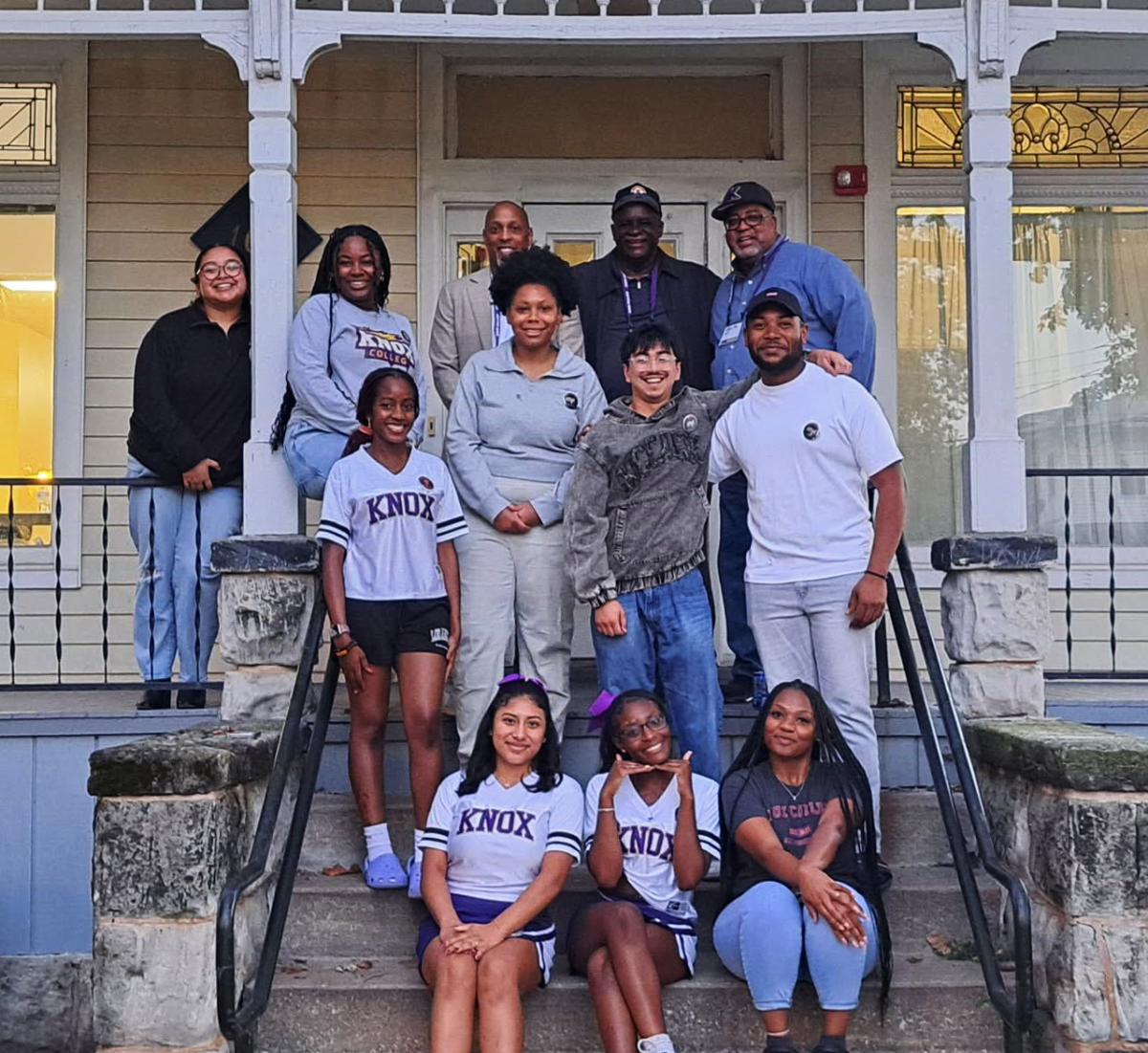
A.B.L.E., which stands for Allied Black Liberty and Equality, is a cultural house at Knox College dedicated to representing and supporting the African American community on campus.

A.B.L.E. is designed to be a safe space where students of color can be themselves and decompress from academic and personal pressures. It exists to support African American students, motivate and uplift them, and foster a strong sense of belonging and identity.
At its core, A.B.L.E. believes in the importance of community — understanding one’s community and finding connection as essential tools for navigating both campus life and the world beyond.
Before I even knew there was a Black cultural house at Knox, I often felt disconnected from home and from being around faces and backgrounds like mine.
My freshman year at Knox was crazy. I tried new things, met new people, and even explored new foods. But one thing I never imagined doing was joining a cultural house. That changed because of my friend Davion Williford, a former Knox student who later transferred. He wanted to go to A.B.L.E. because he heard they held meetings every Wednesday. So Davion, our friend T’shareah Willingham (class of 2028), and I decided to attend.
We met all the members in A.B.L.E., and they were welcoming. They asked questions, and so did we. A lot of the members were upperclassmen, and my friends and I were just freshmen.
They were in the middle of elections and talking about the executive board. Most of the upperclassmen had things to do and were busy. So my friends wanted to do it, and my other friend agreed, and so did I. That same day, we all became a part of A.B.LE.
At first, it was rocky because I was a freshman about to carry a load, but I didn’t know it. At the time, A.B.L.E. was undergoing a period of rebranding. We knew when A.B.L.E lost its way. Previous classes stopped advocating for it, meetings faded, and slowly its meaning began to disappear. I became vice president, Davion became president, and T’shareah became treasurer.
Together, we organized and executed meetings, planned engaging events, reached out to African American students across campus, and shared what A.B.L.E. meant to us. We spoke about how nice it feels to walk into a space and see familiar faces and to know we are similar.

After going out promoting A.B.L.E., watching my peers host events and parties, speaking to alumni, and more, together, we found unity. Within a year, I watched A.B.L.E. grow stronger after its setbacks.
So, I ask you again: Have you ever been a part of a community where you are not judged for your skin or your background, but valued for who you are?
A.B.L.E. gave me that space. If you’re still searching for your place on campus, know that spaces like A.B.L.E. exist for you. Sometimes all it takes is walking into one meeting and seeing what it’s like.